 THE BUILDING
SAFETY CENTRE
BUILDING SAFETY
CENTRE
A professional Midlands base for people responsible for safer buildings.
Desks, resident practices, meeting space, CPD and training — all under one roof in Burslem.
A community of professionals making buildings safer
Our goal is to bring together a community of professionals working to make buildings safer — for education, collaboration, networking and business growth. Building safety is rarely one person’s job alone: an architect, a surveyor, a fire consultant and a facilities manager all touch the same building at different points, and the Centre exists to put them in the same room, on the same square, on the same day.
Education
A running CPD programme and professional training built around real building problems, not generic modules.
Collaboration
Independent practices working under one roof, sharing knowledge without giving up their own identity.
Networking
Member events, sponsored demonstrations and a growing directory of people who already know each other’s work.
Business growth
Referrals, introductions and earlier involvement in projects — the practical payoff of being known to the right people.
Who it's for
Every desk, room and event here is built around one type of visitor: people professionally responsible for a building being safe.
A building with its own history
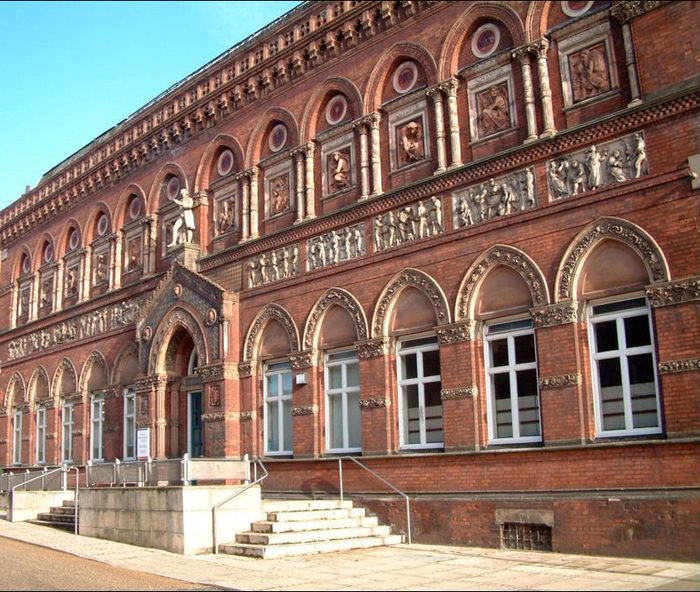
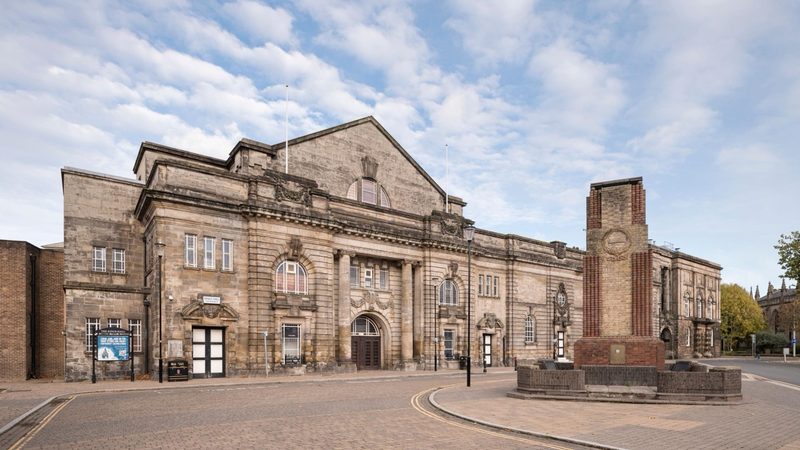
Swan Square has sat at the centre of Burslem life since the town’s earliest streets took shape in the eighteenth century, a short walk from the Old Town Hall and the Wedgwood Institute.
Number 10 itself was formerly a Taylor and Lloyds Bank building, later a bookmaker’s, and most recently a Singapore restaurant. The old bank vault door is still in place — the kitchen now sits inside the vault.
The beehive symbol for Taylor and Lloyds can still be seen at the top of the building, which suggests the bank was built before 1884, the year Lloyds adopted the black horse as its symbol instead.
Bernard Blakeman Architect has produced the specification, drawings and programme of works to restore the building’s historic fabric and bring the floor space back into use as an office.
The building has always earned its keep: a bank, then a bookmaker’s, then a restaurant, and now a professional centre. Same address, a long line of different trades.
Three architects who shaped the Potteries
The Centre’s rooms are named after them — not as decoration, but because each one has a valuable connection to our heritage, our buildings and our history.
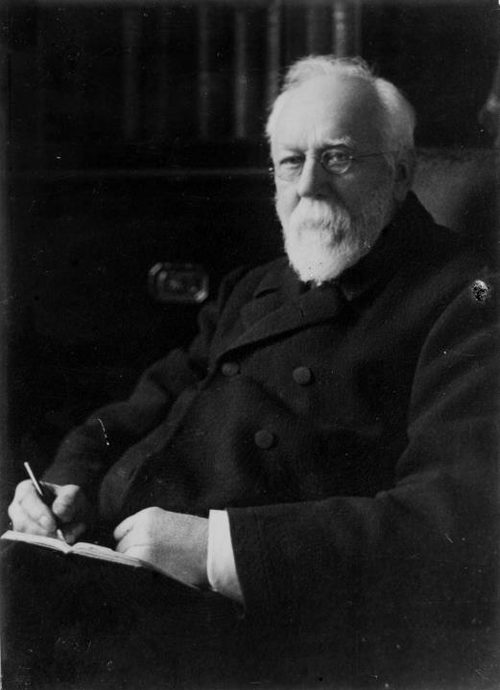
Charles Lynam
Ran his father’s Stoke-upon-Trent practice from 1853 until his death, designing the Stoke Free Library and Baths and the North Staffordshire Infirmary. FRIBA 1882, Mayor of Stoke in 1903, and a serious amateur archaeologist and church historian on the side.
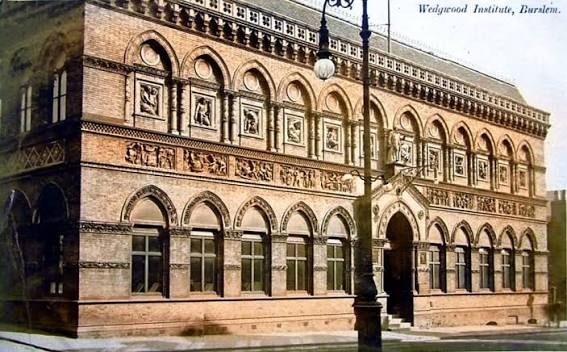
Absalom Reade Wood
Born in Burslem to a family of Burslem potters. Set up his own Tunstall practice in 1874 and designed Burslem School of Art, Middleport Pottery and Burslem United Reformed Church — by his death, one of North Staffordshire’s best-known architects.
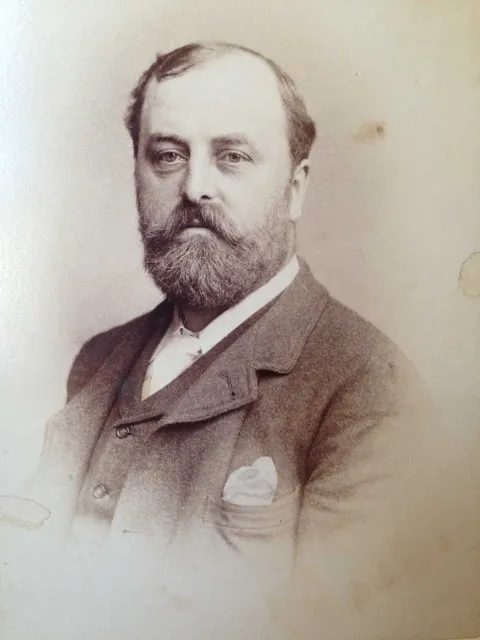
Henry Ward
Architect and town surveyor, trading as Henry Ward and Son from Eastwood Place, Hanley. Commissioned in 1834 to design Stoke-upon-Trent’s Town Hall, the earliest of the three architects, working when the six Potteries towns were still separate settlements.
Reference images sourced for internal review; most are archive photographs or commercial stock, so rights will need clearing properly before any of this goes live.
Four rooms, each with its own character
Named after architects with a valuable connection to our heritage, our buildings and our history.
The Founders’ Suite
A 2/3 person office with its own meeting space, private toilets and kitchen. Established, collaborative, quietly confident.
The Charles Lynam Suite
Generous, learned, adaptable — the Centre’s public forum, doubling as hot-desk space day to day.
The Reade Wood Room
More intimate and creative. Calm on camera, acoustically controlled, built for conversation.
The Henry Ward Office
Compact, settled, dependable — a quiet study rather than an open room.
Our founding resident practice
An independent specialist consultancy, based in the Founders' Suite and bringing its own name, clients and way of working into the Centre.
DMB Fire Safety
DMB Fire Safety is the Centre's resident fire safety consultancy, working across industry, heritage, commercial and industrial buildings, bringing its own client base and expertise into the Centre's founding suite.
A growing community of building safety professionals
Beyond the founding practice, the Centre is built to hold a wider community of resident and associate practices working across the same disciplines.
Architecture Practice
Residential and commercial design, working closely with fire and building safety consultants on site.
Building Surveying Practice
Condition surveys, dilapidations and defect diagnosis across commercial and heritage stock.
Health & Safety Consultancy
Site safety, risk assessment and compliance support for industrial and construction clients.
Facilities & Property Management
Day-to-day management of commercial portfolios, from compliance records to contractor oversight.
Principal Design Consultancy
Building Regulations and principal designer duties for projects across the Midlands.
Specialist Contractor
Installation and maintenance work in fire doors, compartmentation and passive protection.
Illustrative profiles, shown to demonstrate how a growing resident and associate community would appear on the page — not real member practices.
Two more ways to use the Centre
Not everyone needs a desk. Some people just need the address; others just need the room.
A credible address, no desk required
For building-sector professionals who want the Swan Square address and the professional community around it, without the overhead of a permanent desk.
- Professional business address for correspondence
- Mail receipt, with forwarding and scanning available
- Access to Centre events and the member network
- Included in Associate Membership, from £45–65 + VAT a month
- Optional upgrade to a full Companies House registered office
The Reade Wood Room
A calm, acoustically controlled room for client meetings, video calls, interviews and podcast recording — bookable by members and non-members alike.
- Video conferencing and podcast-ready audio and lighting
- Included hours with Resident Professional and Resident Practice — Dedicated Office membership
- Bookable by the hour once included hours are used
- Recording support available for podcast and video sessions
- Sized for small groups, calm on camera
Three clear levels
Built around who actually needs a desk, and who just needs an address and a foot in the door.
Resident Professional
- Dedicated desk
- Business address & mail receipt
- Secure locker
- Enterprise-grade Wi-Fi
- Four meeting-room hours a month
- Member event access
Resident Practice — Dedicated Office
- Private office in the Henry Ward Office
- Quieter 2–3 person room
- Business address & mail receipt
- Six meeting-room hours a month
- Lockable storage
- Greater confidentiality
Associate Member
- Professional business address
- Mail receipt
- Member meeting-room rate
- Access to events
- One coworking day a month
- Profile on the Centre website
Built around real building problems
Focused evening sessions in the Charles Lynam Suite — one clear audience, one live problem, time for real discussion. Informed conversation, not a hard sell.
The programme exists to educate professionals on what actually keeps a building safe, and to raise standards across the industry by building a genuinely knowledgeable professional community, not by ticking a CPD box once a year. Monthly events bring the same people back into the same room on a regular date, so networking and knowledge transfer happen naturally over time, not just on the night.
A regular date, not a one-off
Held on a set date each month, so it becomes part of a member's routine rather than something to remember to book.
The same room, over time
Real relationships build when the same faces keep showing up, not from a single evening of introductions.
Passed between disciplines
What an architect learns from a fire consultant, or a surveyor from a facilities manager, stays useful long after the session ends.
Illustrative example month. CPD evenings are held on the third Wednesday of the month, so members always know the date without checking a listing.
Credible evenings on real subjects: the materials, the regulations, the standards that actually govern the work. Each one is led by a guest speaker, a technical specialist, an engineer, a trade body representative, someone who knows the subject properly, with a supplier or manufacturer supporting the evening rather than running it.
Manufacturers and suppliers support an evening from £250–500, covering the room, refreshments and promotion to a genuinely relevant audience. The Centre keeps editorial control throughout, so every session stays a credible technical evening, not a product pitch with a guest list attached.
Talk to the Building Safety Centre
Interested in a resident desk, dedicated office, meeting room, event, CPD session or partnership? Send us a message and the Centre team will get back to you.
We use the details you submit through this form to respond to your enquiry. For privacy questions, email reception@buildingsafetycentre.co.uk.